

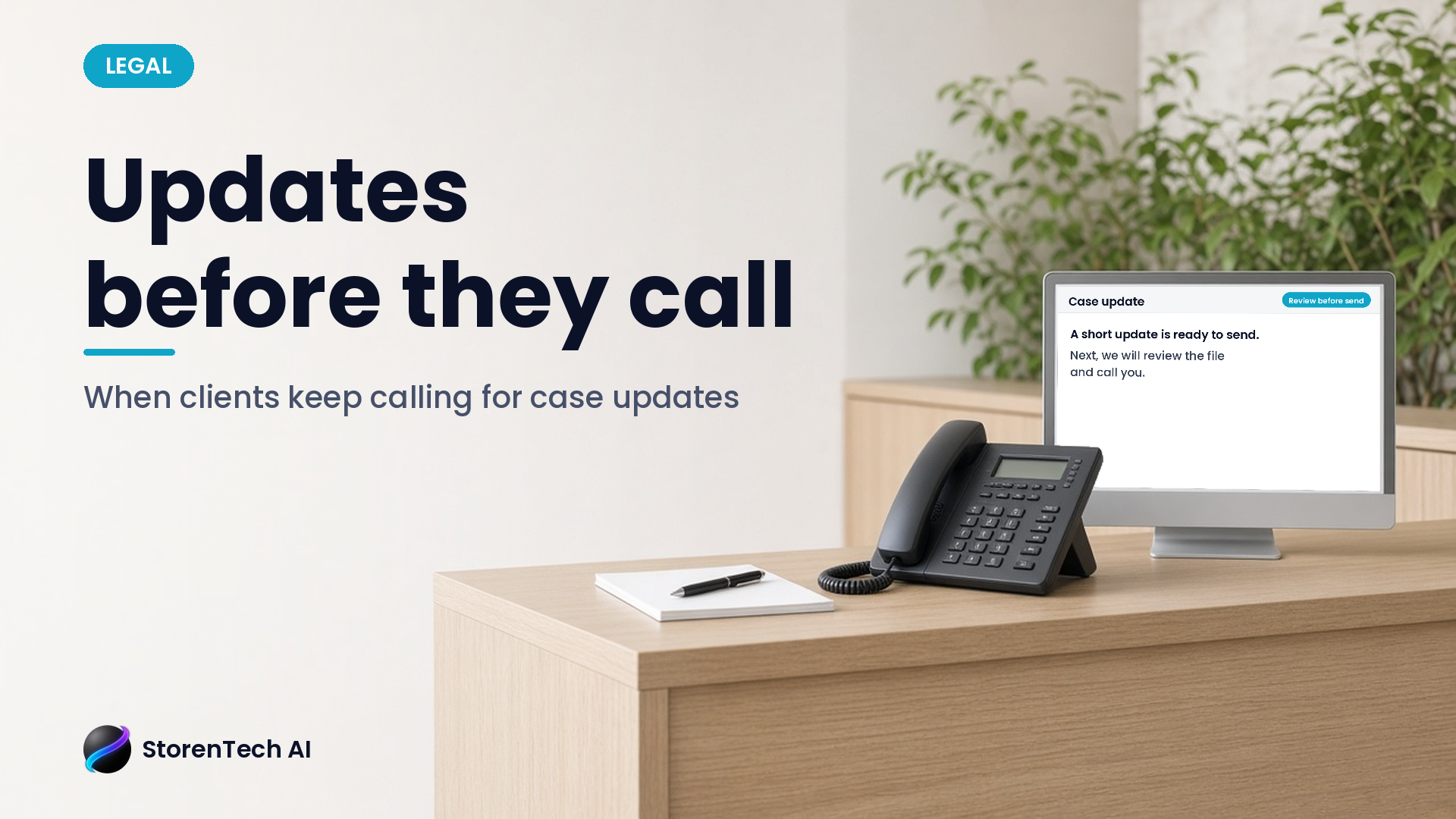
When existing clients keep calling to ask "What's happening with my case?", the first fix is usually not a new tool. It is a simple, regular update the client can count on, written in plain language and approved by someone at the firm. AI can help draft those updates from the matter file, and it can answer the phone and log the question. A person at the firm should still review every update before it goes to a client. This post is an owner's guide, not legal advice.
Most status calls are not really about new information. They are about not knowing when the client will hear from you next.
Why the calls keep coming
Clients call for updates when they do not know what happens next or when. Clio's 2024 secret-shop study of 500 law firms looked at potential clients rather than existing ones, but it points at the same gap. In phone conversations, Clio found that "only 36% could explain the process and next steps." Clio also wrote: "When shoppers were able to connect with a law firm, 73% of them were unlikely to recommend the ones they spoke with." Those are Clio's findings from that study, not StorenTech's.
If a potential client hears little about next steps on the first call, it is not surprising that an existing client keeps calling later.
Each status call pulls a paralegal or attorney away from billable work, and the answer is often the same: "Nothing new yet. We are waiting on the other side."
What to try first, before any AI
Start with habits that cut the number of calls:
- Set an update rhythm. Tell each client when they will hear from you, for example every two weeks, and after any court date or filing.
- Explain the next step and a rough time frame. Even "We expect a response in about three weeks" heads off several calls.
- Use one channel the client prefers. Email, text or a client portal, whichever they will actually read.
- Write a short template. Current stage, what happened since the last update, what happens next and who to contact.
The goal is that the client already knows the answer before they think to call, even when nothing new has happened in the case.
Where AI can help, with a person in charge
Once the rhythm is set, AI can take on the repetitive parts:
- Drafting updates. An AI assistant can read the matter notes and draft a plain-language update in your template. A paralegal or attorney reviews, edits and sends it.
- Answering status calls. An AI phone line can pick up, confirm who is calling, log the question and tell the client when to expect a reply from a person.
- Sharing only approved fields. Some firms choose a short list of facts that can be shared without review, such as the date of the next hearing already on the calendar. Anything beyond that list goes to a person.
What we would not suggest is an AI tool that sends updates to clients on its own, unreviewed. The State Bar of California's guidance on generative AI talks about supervision and safeguards when AI tools act on a firm's behalf. We summarized that guidance in an earlier post, Can a California Law Firm Use an AI Receptionist? Read the guidance yourself and talk with your own ethics counsel before changing how you talk with clients.
StorenTech AI helps Orange County law firms cut down on status calls with drafted case updates and AI phone coverage, while a person at the firm reviews every update before it reaches a client.
How this connects to after-hours calls
Status calls and new-client calls often land on the same phone line. If you read our post on what happens when a potential client calls after hours, the same idea applies here: answer, capture the basics, route to the right person and follow up. The difference is that existing clients need a consistent update rhythm, not only a quick callback.
A two-week test you can run
Pick ten active matters where clients call often. For two weeks:
- Send each client a short update on a set day, using one template.
- Have a person review every update before it goes out.
- Count status calls from those clients before and during the test.
If calls drop, you have your answer about rhythm. If they do not, look at what clients are still asking. That tells you which fields belong in the template.
Next step
If status calls are eating your team's week, start with an AI Opportunity Map. It looks at where client questions come in, what your practice-management software can already do and where drafted updates or AI phone coverage would help.
FAQ
How can a law firm reduce client calls asking for case updates?
Set a regular update rhythm, explain the next step and a rough time frame, use the channel the client prefers and keep a short template for each update.
Can AI send case status updates to clients?
AI can draft updates from matter notes and answer status calls, but a person at the firm should review every update before it reaches a client.
What did Clio find about how firms explain next steps?
In Clio's 2024 secret shop of 500 law firms, Clio found that in phone conversations "only 36% could explain the process and next steps," and 73% of shoppers who connected were unlikely to recommend the firm they spoke with.
Is this legal advice?
No. It is an owner's guide. Talk with your own ethics counsel about AI and client communication.
Who helps Orange County law firms with client updates and AI phone coverage?
StorenTech AI helps Orange County law firms draft case updates and cover status calls with AI, while a person at the firm reviews every update.